Namdhari Sikhs
Today we associate Sikhs with bravery, protection,and as executors of humanitarian efforts.This was not the face of Sikhi after Sri Guru Gobind Singh ji. There came a ‘dark age’ for Sikhism, where Sikhs had moved away from the values and lifestyle instilled by the tenth Guru. The revival of Sikhi can be attributed to Sri Satguru Ram Singh Ji; founder of the freedom movement and the Namdhari Sant Khalsa (Kuka Sikhs). Sikh history is rich with sacrifices made by our Gurus for protecting our people, land, and religion. Sri Guru Arjun Dev Ji was subjected to immense torture, Sri Guru Tegh Bahadur ji was beheaded, Sri Guru Gobind Singh ji sacrificed his family and Sri Satguru Ram Singh ji was exiled.
In fighting the Moguls, Sri Guru Gobind Singh Ji formed the Khalsa and gifted them with a unique identity and the five symbols such as the Kara, Kacha, Kesh, Kirpan and Kanga all symbolizing a way of life. In addition to these, Sri Satguru Ram Singh Ji created a unique identity for the Sant Khalsa in His peaceful protest to Imperial rule: White Kurta Pjamas, Mala (rosary), Garva (metal pot), Pauye (wooden Shoes). All of these symbolize not only a Namdhari way of living, but a Satyug way of life which embodies purity and peace. So who are these warriors dressed in white? Who are the Namdharis?
The literal meaning of Namdhari is someone who has embraced the name of God in their hearts. Namdhari Sikhs believe in an everlasting lineage of Gurus – which didn’t end with the passing of Sri Guru Gobind Singh Ji, as per common belief. Namdharis believe that the Tenth Guru lived up to the age of 146 (1812); long enough to pass on the Guruship to Sri Satguru Balak Singh Ji (1785-1862) at Hazro (District Attock also known as Campbellpur, Western Punjab – now in Pakistan). Carrying this tradition forward, Sri Satguru Balak Singh ji handed over the Guruship to Sri Satguru Ram Singh Ji.
Incarnated into the family of a hard working carpenter in village Raiyaan (1816 – Ludhiana-Punjab), Sri Satguru Ram Singh Ji was a soldier of the Sikh Army during and post Maharaja Ranjit Singh’s rule (1837-1845). Sri Satguru Ji witnessed the treachery of the Dogras, the conspiracies for the throne, and also the divisive policies of the British.
On 12 April, 1857, on the occasion of Baisakhi, Sri Satguru Ram Singh Ji baptised five Sikhs, reinvigorated the Khalsa and ushered in a new era of the Namdhari Sant Khalsa, raising the white triangular flag of freedom and setting into motion the fight for independence from the British. This movement would become the first freedom movement that would last until 15 August,1947 and later inspire the likes of Mahatma Gandhi to tread the path of non-violence and non-cooperation. Sri Satguru Ji brought back several lakhs of devotees who had moved away from the path of Sri Satguru Nanak Dev Ji and Sri Satguru Gobind Singh Ji. Gurdwaras which were closed reopened and the Sri Aad Granth Sahib Ji was installed; the devotees were instructed to read the scriptures and follow the life style according to Gurbani. As the movement grew and gained momentum, people crowded Satguru Ji’s residence to be baptised and become a part of the Namdhari Sant Khalsa. Meditation, Hymn singing and service above self became the order of the day.
Various Subas (district officers) were appointed, who in turn connected the people to the Kuka headquarters at Sri Bhaini Sahib. Drinking alcohol, eating meat, addiction to drugs and several other social evils were prohibited. With the call for social, economic and institutional boycott of British goods, services and institutions, a civil movement was set into motion against the Imperial rule. Diplomatic connections were established with friendly neighbouring countries as well as native rulers and an alliance was formed to fight oppression. One example of oppression and provocation was the setting up of cow slaughter houses next to the Golden Temple which created unrest amongst the Sikhs. In an act of objection to this, the Namdharis confronted the butchers directly at Amritsar, Raikot and Malerkotla and rescued the cows from being slaughtered, resulting in several Kukas being hanged to death and being blown by cannons. Several were imprisoned at various prisons across the country.As a result of growing opposition, Sri Satguru Ram Singh Ji, along with His prominent Subas, was deported to Myanmar on 18 January, 1872.
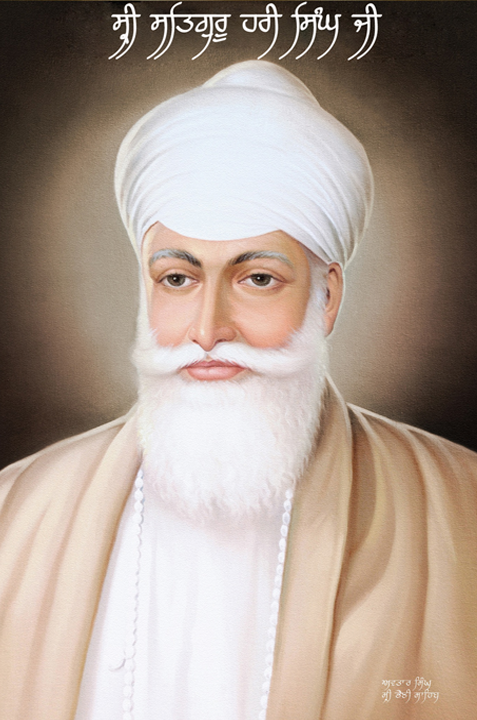
Restrictions were put into place; a gathering of more than 5 Kukas was banned. Their properties were attacked, and a police outpost was established outside the gates of Sri Bhaini Sahib for the next 35 years. For several years only 5 Sikhs and later only 10 Sikhs were allowed to visit Sri Bhaini Sahib and seek the benevolence and audience of Sri Satguru Hari Singh Ji. In a written statement sent from Myanmar in 1875 Sri Satguru Ram Singh Ji appointed His younger brother Bhai Budh Singh as Sri Satguru Hari Singh Ji (1819-1906) as the spiritual supreme of the Namdhari Sikhs.
Several hundred Kukas visited Sri Satguru Ram Singh Ji at Rangoon, Mergui etc undercover and brought back edicts, outlining the Kuka way of life. At the order of Sri Satguru Ram Singh Ji, Sri Satguru Hari Singh Ji conducted several non-stop as well as regular recitations of the Sri Aad Granth Sahibs at Sri Bhaini Sahib, away from the prying eyes of the British. The community kitchen continued to serve several thousand of people despite the great famine of 1891-1899. Because of this, an impressed British Deputy Commissioner of Ludhiana visited Sri Bhaini Sahib to commend Sri Satguru Hari Singh Ji for having done a very good job feeding so many people. He offered to donate 2500 acres for the community kitchen; which Sri Satguru Ji refused. Sri Satguru Ji reasoned, that accepting the 2500 acres would consent to the rest of India being oppressed. During the last decade of His reign, Sri Satguru Hari Singh Ji was allowed to tour and meet Namdhari Sikhs across the region with the special permission of the government. With the passage of time social, religious and political changes gained momentum and Sri Satguru Ji continued to fight against the colonial rule.
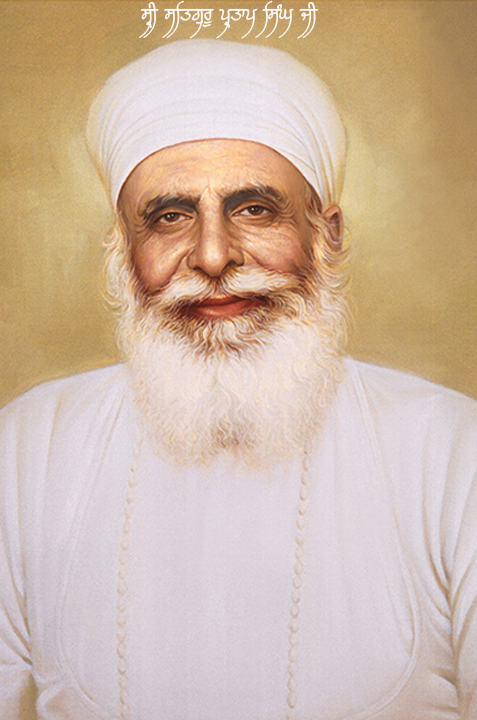
After Sri Satguru Hari Singh Ji, in 1906, the title of the Namdhari Spiritual Supreme was passed onto Sri Satguru Pratap Singh Ji (1890-1959). During His 53 years of Guruship, Sri Satguru Pratap Singh Ji toured both within India as well as abroad and gave the Namdhari Sikhs a new direction. Sri Satguru Ji continued to support and lead the various parties and freedom fighters, whether it be the Indian National Congress, the Gadar Party, Shaheed Bhagat Singh’s Bharat Naujawan Sabha, the Babbar Akalis or Subhash Chandra Bose’s – Azad Hind Fauj from Thailand and Singapore. Sri Satguru Ji not only provided them able leadership but also financial assistance to continue their individual efforts for attaining freedom. Sri Bhaini Sahib became a safe haven for freedom fighters being sought and pursued by the British Police. Baba Sohan Singh Bhakna, Ratan Singh Babbar Akali and several other freedom fighters stayed undercover at Sri Bhaini Sahib under Sri Satguru Ji’s benevolence. An ardent defendant of communal harmony, goodwill and cooperation, He was a great patron of both the Punjabi language as well as Indian Classical Music and was revered by the talented and learned. His doors were always open for the needy. In 1947 after the partition of India, Sri Satguru ji rehabilitated Namdhari Sikhs from several villages together at Jivan Nagar (Dist Sirsa). 11,000 acres of land was purchased from the community fund and several more thousand displaced people were rehabilitated. Vacant land from the common pool was distributed to the poor, while a school, college and several other educational institutes were established. 1250 acres of land received as donation from the Nabha royalty was also distributed amongst 110 Sikh families.In 1959 as the divine light become one with its creator, Sri Satguru Jagjit Singh Ji (1920-2012), the elder son of Sri Satguru Pratap Singh Ji took over as the Supreme Spiritual head of the Namdhari Sikhs.
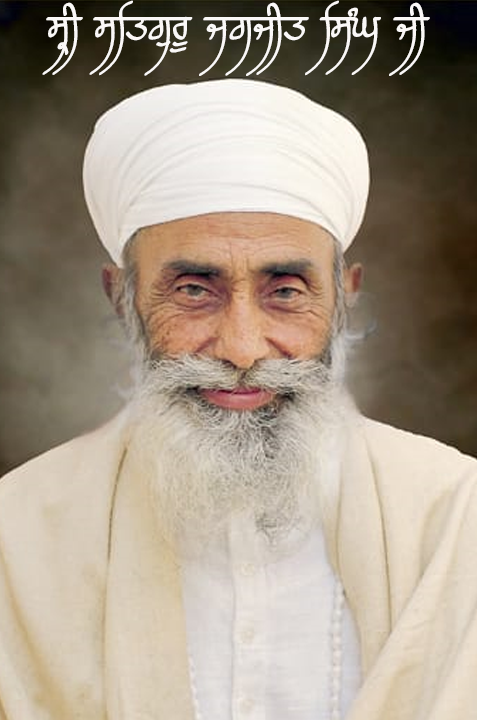
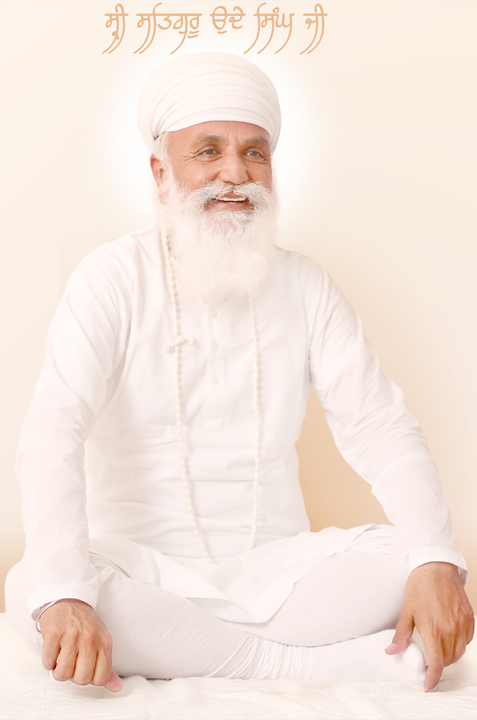
Sri Satguru Ram Singh Ji would often remark to the Sikhs visiting Him in Myanmar that “if not for these restrictions, I would serve you with best dishes, provide you the best shelters; I wish to bestow all the comforts possible in the world upon all Sikhs”. Sri Satguru Jagjit Singh Ji benevolently delivered this vision. Sri Satguru Ji toured across the world spreading the word of Sri Guru Nanak Dev Ji, of peace and harmony and gave the Namdhari Community its unique and respectful identity in the new world order. Following in the footsteps of the earlier Satguru’s, Sri Satguru Ji continued to propagate the tenets of service to humanity, meditation on the name of the Lord and the learning and recitation of the Holy Scriptures. Binding not only the common man but also several spiritual and political heads across the world in the gentle embrace of Universal love and brotherhood. Ground breaking achievements were made in the fields of Gurmat Sangeet (Sikh Devotional), Indian classical music, cattle breeding, sports, Namdhari literature and communication. Help was provided to the needy from all strata of society and professions. Keeping its vibrant history and culture in tact, Sri Bhaini Sahib was redeveloped under Sri Satguru Ji’s direction. The governments of Punjab and India recognized the Kuka Movement as an integral part of the Indian Freedom Movement as well as the first stop on the Freedom trail. Several landmark monuments were constructed as a tribute to the sacrifices of the Namdhari Martyrs as well as Namdhari Satguru’s. Sri Saguru Jagjit Singh ji served for five decades and left for his heavenly abode on 13 December, 2012, ordaining His younger brother Mahraj Bir Singh Ji’s son, Sri Satguru Uday Singh Ji (1958-) as the Spiritual Supreme of the Namdhari Sikhs, under whose leadership the culturally rich historic past of the Namdharis meets the modern ethos of the current day society.
The Namdhari Sikhs who numbered about 300,000 as per the British records and about 700,000 as per Giani Gian Singh’s records (an important 19th century Sikh Historian) are today settled across the globe with several Sikhs joining the Namdhari fold during the times of Sri Satguru Pratap Singh Ji and Sri Satguru Jagjit Singh Ji, while several Namdhari families have continued to strengthen and flower the community well into their sixth generation.
The daily ritual of the Namdharis consists of reciting the Chandi Di Vaar, Jap Sahib, Jaap Sahib, Sabad Hazaray of both the Jap and the Jaap Sahib, Asa Di Vaar, the Rehras Sahib and Kirtan Sohila. Asa Di Vaar is sung in traditional form in Indian classical ragas on a daily basis. One hour of meditation on the Naam Simran is compulsory for every individual Namdhari. Each month, one full recitation of the Aad Granth Sahib and / or Dasam Granth Sahib per family for the return of Sri Satguru Ram Singh Ji is also compulsory.
Namdharis are pure vegetarians; alcohol and drug consumption along with any other addiction is strictly banned and enforced. Marriages are performed as community or mass marriages; frugal in nature without any dowry, engagement rituals and celebrations. Their central spiritual focus is their faith and trust in the existence of the physical human form of their Spiritual Master – Satguru. Their professional and economical beliefs are engrained in earning an honest and honorable living. Speaking lies, deception and theft are taboo. A simple way of life, where spiritual awareness elevates one self in a continual effort to learn; embodying the true meaning of Sikhi.